
Did You Just Say Cancer… and I'm Discharged?
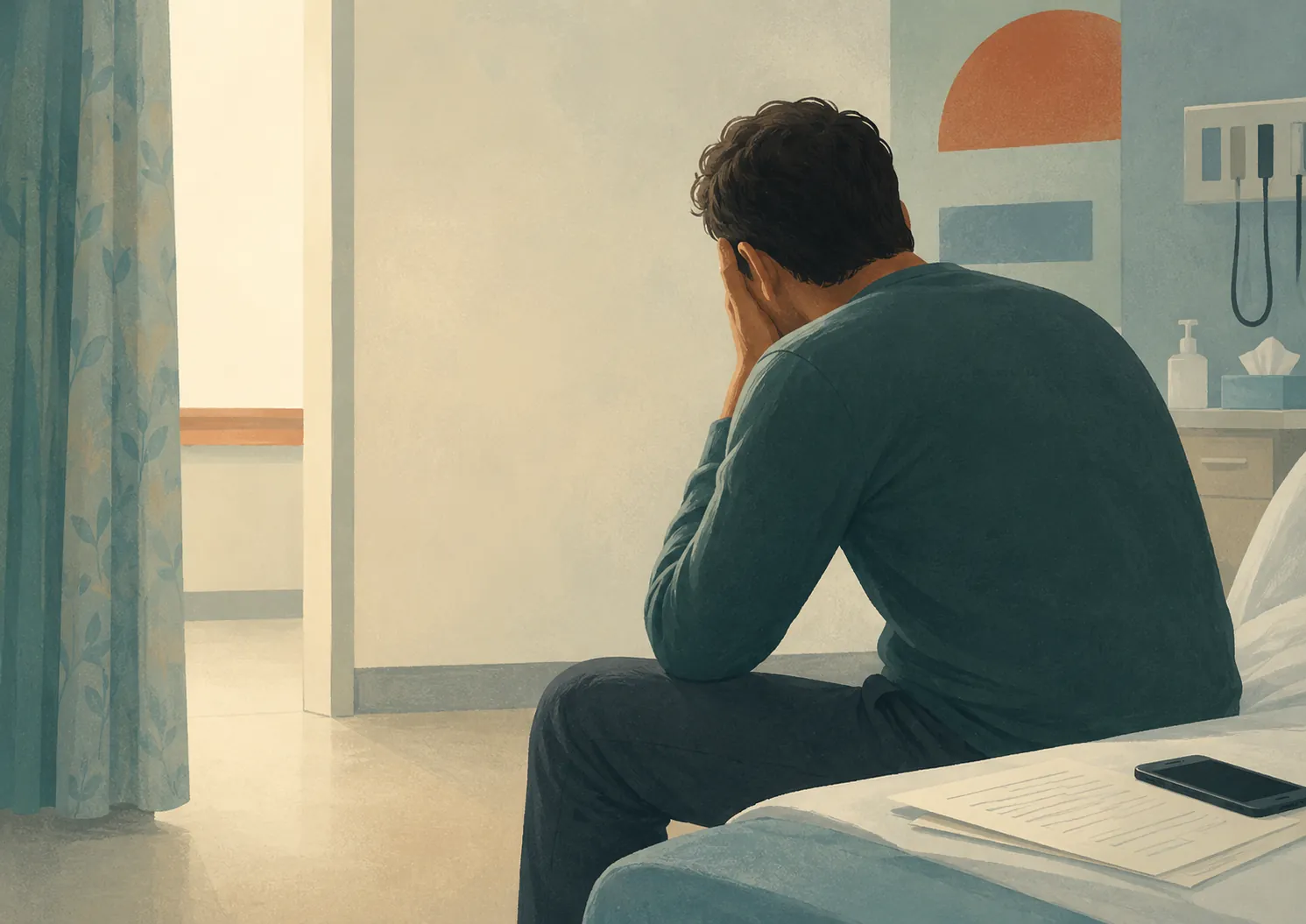
Where's the doctor? My results came back 10 minutes ago. And I looked them up online. And now I wish I hadn't.
A knock at the door and the ED physician walks in.
"I got the results back from your CT scan, and I'm sorry to say it's not good news. The scan shows a nodule in your right lung."
Breathe.
"I wish I could tell you that it has a reassuring appearance, but it doesn't."
Keep breathing.
Cancer is dangerous, but…
Finding something that may be cancer is serious. But "serious," "urgent," and "an emergency requiring hospitalization today" are not always the same thing.
In the emergency department, we rarely diagnose cancer, but we do often find it, and those are two different things. Most cancers cannot be confirmed from a scan alone. In most cases, doctors need to examine a sample of tissue or cells to know for certain whether cancer is present. This is known as a biopsy. Many biopsies are scheduled as outpatient procedures, although some are performed during a hospitalization when the patient's condition or the location of the abnormality requires it.
If the patient is medically stable, their symptoms can be managed safely at home, and the finding is not causing a complication that requires hospital treatment, the next steps can often occur as an outpatient.
Callout: Being discharged does not mean the finding is harmless or unimportant. It means the next stage of the evaluation can safely happen outside the hospital.
When is cancer an emergency?
Sometimes the cancer itself requires urgent specialist evaluation. This is most often true with certain blood cancers, such as acute leukemia and some aggressive lymphomas, which may require admission or transfer for urgent testing and treatment. Even then, the exact timing and treatment plan depend on the patient's condition, laboratory results, and the specific type of cancer suspected.
More often, a patient with cancer is admitted not simply because cancer is present, but because the cancer or its treatment has caused an immediate medical problem. Examples include severe electrolyte abnormalities, a tumor blocking the airway, esophagus, or intestines, pressure on the spinal cord, major bleeding, a collapsed lung, uncontrolled pain or vomiting, or a serious infection in someone whose immune system has been weakened by chemotherapy.
So what happens after discharge?
You can be unlucky enough to learn that a finding may be cancer and lucky enough to be discharged at the same time. Though, nothing about it feels lucky.
"Cancer" is not one diagnosis. Lung cancer alone includes multiple types and subtypes that may respond to very different treatments. A biopsy can show whether the abnormality is cancer and, if so, what type it is. Additional testing on those cells may then help determine which treatments are most likely to work.
Before you leave, you should know which clinician or office is responsible for the next step. That may be your primary care provider, but some patients are referred directly to a specialist, lung-nodule clinic, or other dedicated follow-up program. Depending on what was found, the next steps may include reviewing the images, ordering additional imaging or laboratory tests, arranging a biopsy, and referring you to the appropriate specialists.
Questions?
Before you leave the emergency department, it's okay to ask questions. Hearing the word cancer can be difficult, and it often shuts off the listening part of your brain. You might notice that the ED clinician pauses or repeats important information to make sure you hear it. Before leaving, you should have answers to questions like these:
- What was actually found?
- Is cancer just a possibility or the leading concern?
- Who is responsible for arranging follow-up?
- How quickly should follow-up occur?
- Is additional imaging recommended? Who will order this?
- Which symptoms require immediate return to the emergency department?
Back to the patient…
I think he just said cancer.
"Now, we don't know for certain from the CT scan alone. You'll need more evaluation, which may include additional imaging and a biopsy. I spoke with your primary care physician, and her office is going to help arrange the next steps. That may include an appointment with a pulmonologist, a lung doctor, who can review the scan and determine what testing is needed.
"There isn't another test we can do in the emergency department today that would give us the final diagnosis, and there isn't a treatment you need in the hospital right now. You're medically stable, your symptoms can be managed at home, and the finding isn't causing a complication that requires hospital treatment. I'm going to get your discharge paperwork together.
"If you develop trouble breathing or severe chest pain, cough up blood, feel faint, or become significantly worse, come back to the emergency department. Otherwise, follow the instructions we give you and speak with your primary care office promptly. What questions do you have for me?"