
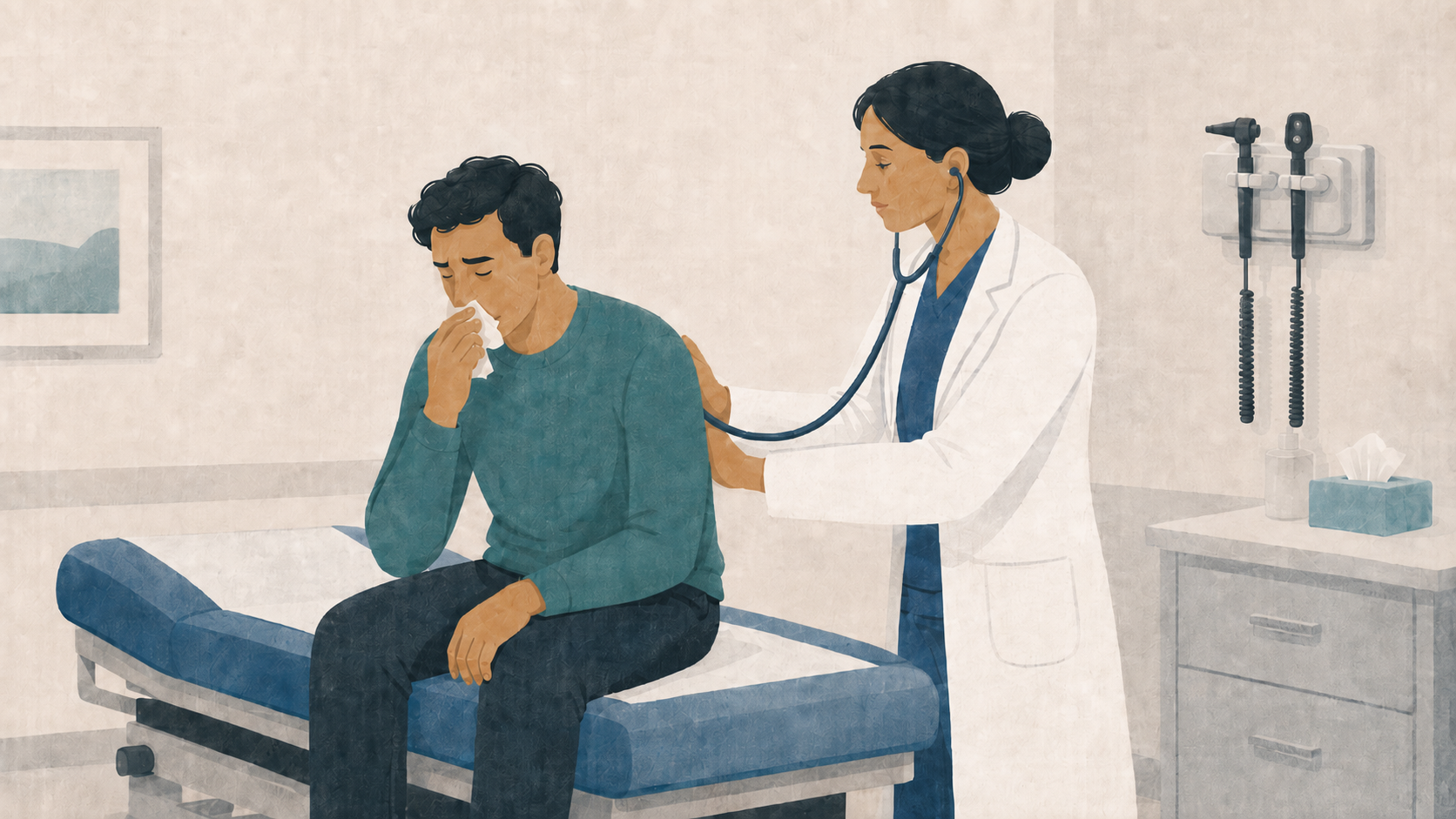
“I’ve been sick for more than a week. My face hurts, my mucus is green, and now I’m coughing. The last time this happened, my doctor gave me a Z-Pak.”
The emergency physician listens to your lungs, looks in your ears and throat, and presses over your sinuses.
“I don’t think an antibiotic will help.”
And there it is.
You may hear: You’re not really sick. Or: There’s nothing wrong with you. Or perhaps: You waited all this time, and now the doctor isn’t going to do anything.
Chances are, that’s not what the clinician means at all.
You can be genuinely miserable and still have an illness that won’t improve with antibiotics. The question isn’t whether your symptoms are real. The question is whether an antibiotic is likely to change what happens next, and whether that possible benefit outweighs the risks of taking it.
Going to the emergency department means asking to be evaluated, not placing an order for a particular treatment. But it should still be a conversation. The clinician’s job is to determine what is most likely causing your symptoms, recommend the treatment most likely to help, and explain what you should expect next.
Medicine changes
When I say medicine changes, I’m talking about the practice of medicine, although the medications themselves change too.
Research gives us new information. Recommendations change. Sometimes treatments that once seemed sensible turn out not to help very much. Occasionally, they cause more harm than benefit.
Antibiotics have been prescribed much more freely in the past. Some clinicians were taught to treat conditions with antibiotics that we now often manage without them. Different clinicians and healthcare systems also adopt new evidence at different speeds.
That can create an understandably confusing experience:
I had the same thing last year, and the doctor gave me an antibiotic.
I believe you.
But receiving an antibiotic and then getting better doesn’t necessarily mean the antibiotic caused the improvement. Many illnesses improve during the same few days that someone happens to be taking the medication. Without a comparison group, there’s no way to know whether the illness would have followed the same course without it.
That’s one reason medical research matters. It allows us to compare similar patients who received an antibiotic with those who did not. Sometimes the difference is dramatic. Sometimes it’s surprisingly small. And sometimes there’s no meaningful difference at all.
Why not just take one anyway?
Antibiotics treat certain infections caused by bacteria. They don’t treat viruses, and they don’t reduce the symptoms of a viral illness simply because you feel very sick.
They also aren’t neutral medications to take “just in case.”
Antibiotics can cause nausea, diarrhea, rashes, yeast infections, and interactions with other medications. Less commonly, they can cause serious allergic reactions, kidney or liver injury, abnormal heart rhythms, or lead to an intestinal infection called Clostridioides difficile, often shortened to C. diff. Antibiotics are a common cause of medication-related visits to emergency departments.
Then there is resistance.
Your body doesn’t become resistant to an antibiotic. Bacteria do. Antibiotics kill susceptible bacteria while allowing resistant bacteria to survive and multiply. That resistance may matter to you during a future infection, and resistant bacteria can also spread to other people.
This doesn’t mean that antibiotics should be avoided when they’re needed. It means the potential benefit should be worth accepting those risks.
There’s another important distinction: finding bacteria doesn’t always mean that bacteria are causing an infection. And even when bacteria are involved, an oral antibiotic may not be the most important treatment.
Sometimes the body can resolve the infection without antibiotics.
Sometimes the bacteria are present but aren’t causing illness.
Sometimes the treatment is drainage.
Sometimes the treatment is an antibiotic drop rather than a pill.
And sometimes antibiotics are absolutely necessary.
The diagnosis matters.
Colds, coughs, and sinus infections
Upper respiratory infections affect the nose, throat, sinuses, and other parts of the upper airway. The common cold is one example. Most upper respiratory infections are caused by viruses and get better without antibiotics. That includes illnesses caused by influenza, COVID-19, respiratory syncytial virus, rhinovirus, and many other viruses that we don’t routinely test for.
The color of your mucus doesn’t reliably tell us whether the illness is viral or bacterial. Yellow or green mucus often comes from immune cells and inflammation. It isn’t a built-in bacterial test.
What about bronchitis?
Acute bronchitis usually causes a cough, often with mucus, after or during a respiratory infection. The cough may last much longer than the fever, congestion, or sore throat. Two or three weeks of coughing can feel excessive, but it isn’t unusual. In otherwise healthy people with uncomplicated acute bronchitis, antibiotics provide little benefit. They may shorten the illness slightly in some studies, but the average difference is small and has to be weighed against side effects.
The more important job in the emergency department is often deciding whether this is actually uncomplicated bronchitis, or whether there are signs of pneumonia, an asthma or COPD exacerbation, heart failure, a blood clot, or another condition that requires different treatment.
A chest cold and pneumonia can both cause coughing. They aren’t treated the same way.
But I’ve had sinus symptoms for a week
Most acute sinus infections also improve without antibiotics, including many that may have some bacterial involvement.
Certain patterns make a bacterial sinus infection more likely:
- Symptoms lasting more than about 10 days without beginning to improve
- Severe symptoms, such as a high fever with significant facial pain or thick nasal drainage for several consecutive days
- Symptoms that start to improve and then become substantially worse again
Even then, the decision isn’t automatic. The severity of the illness, your immune system, your other medical conditions, medication allergies, and whether reliable follow-up is available can all affect the plan. For mild or improving symptoms, more time and symptom treatment may still be the better option.
Diverticulitis
Diverticula are small pouches that can form in the wall of the colon. When one or more become inflamed, the condition is called diverticulitis. For many years, nearly everyone with diverticulitis was prescribed antibiotics. The reasoning seemed straightforward: bacteria live in the colon, so diverticulitis must be an infection.
The current understanding is more nuanced. In an otherwise healthy person with mild, uncomplicated diverticulitis, antibiotics often don’t speed recovery or prevent the illness from becoming complicated. Many patients improve with time, pain control, temporary dietary adjustments, and follow-up.
The last time I had diverticulitis, I took antibiotics and felt better within two weeks.
Again, I believe you.
But uncomplicated diverticulitis commonly improves over several days to a few weeks with or without antibiotics. Feeling better after taking them doesn’t tell us what would have happened without them.
This doesn’t mean that no one with diverticulitis needs antibiotics. They are still commonly recommended when there is:
- An abscess, perforation, obstruction, or another complication
- Fever, sepsis, or significant systemic illness
- A weakened immune system
- Significant frailty or certain serious medical conditions
- Persistent vomiting or symptoms that aren’t improving
- Another reason the clinician believes the risk of complication is higher
The CT findings matter. Your examination matters. Your vital signs, blood tests, immune system, pain control, and ability to drink fluids matter. “Diverticulitis” isn’t one identical illness in every patient.
A positive urine test isn’t always a UTI
Here the distinction is especially important.
A person with burning during urination, frequent urination, urgency, lower abdominal discomfort, or symptoms suggesting a kidney infection may have a symptomatic urinary tract infection. Most symptomatic bacterial UTIs are treated with antibiotics.
But finding bacteria in the urine doesn’t automatically mean there is a UTI. Some people have bacteria in their urine without having an infection that is causing symptoms. This is called asymptomatic bacteriuria. Treating it usually doesn’t help, and it can create side effects and resistant bacteria. There are important exceptions. Bacteria in the urine are generally treated during pregnancy and before certain invasive urologic procedures, even when there are no symptoms.
Urine samples can also be contaminated during collection. Skin cells and bacteria from around the urethra may enter the cup. The laboratory may then accurately report that bacteria grew, but those bacteria may not have been living in the bladder or causing the patient’s symptoms. A urine culture isn’t a misnamed test. It does exactly what it is supposed to do: it grows and identifies organisms from the sample. The difficult part is deciding whether what grew actually matters. That requires the symptoms, examination, urinalysis, culture results, method of collection, and the rest of the clinical picture. A test result can support a diagnosis. It doesn’t make the diagnosis by itself.
An abscess is a pocket
An abscess is a collection of pus beneath the skin or in another part of the body. And an abscess is a pocket. Pockets generally need to be emptied.
For a small skin abscess, that may happen with warm compresses and spontaneous drainage. Others need to be opened through a small incision. For deeper abscesses, drainage may require an interventional radiologist or surgeon. Antibiotics alone often don’t solve the central problem because the collection remains in place.
That doesn’t mean antibiotics never help. Research has shown that antibiotics given after drainage provide a modest improvement in cure rates and may reduce recurrence for some uncomplicated skin abscesses. The decision depends on multiple factors.
This is another situation in which the answer isn’t simply “bacteria equals antibiotic.” The procedure may be the most important treatment. The antibiotic may be an additional treatment, or may not add enough benefit to be worthwhile.
Dental abscesses deserve a special mention. Antibiotics may be needed when infection is spreading or causing systemic symptoms, but they usually don’t correct the underlying dental problem. The tooth may still need drainage, a root canal, or removal. Antibiotics alone can temporarily quiet the problem without fixing its source.
Ear infections aren’t all the same
“Ear infection” can describe several different conditions.
A middle ear infection, or acute otitis media, occurs behind the eardrum. Many children with mild middle ear infections recover without antibiotics. Depending on the child’s age, the severity of the pain and fever, whether one or both ears are involved, whether there is drainage from the ear, and whether follow-up is reliable, a clinician may recommend watching closely for 48 to 72 hours.
That doesn’t mean every child should wait. Younger children, children with severe symptoms, and children with certain examination findings are more likely to benefit from immediate antibiotics. And pain treatment matters either way. Antibiotics don’t provide immediate pain relief.
An outer ear infection, or otitis externa, affects the ear canal and is sometimes called swimmer’s ear. These infections are usually treated with drops placed directly into the ear canal. Oral antibiotics are generally unnecessary unless the infection has spread beyond the canal or the patient has risk factors that make the infection more dangerous.
Not receiving an antibiotic pill doesn’t necessarily mean no antibiotic treatment. Sometimes the correct antibiotic is a drop.
What about strep throat?
Most sore throats are viral. Cough, congestion, hoarseness, mouth sores, and red or irritated eyes may make a viral cause more likely.
Group A strep is different. When strep throat is confirmed with appropriate testing, antibiotics are usually recommended. They modestly shorten symptoms, reduce spread to others, and lower the risk of certain complications, including acute rheumatic fever.
The key word is confirmed.
Symptoms and the appearance of the throat can estimate the likelihood of strep, but they don’t always distinguish it reliably from a viral infection. In many cases, a rapid strep test or throat culture helps determine whether antibiotics are appropriate.
A negative test in an adult usually means an antibiotic isn’t needed. In children and adolescents, a negative rapid test may sometimes be followed by a throat culture.
This isn’t reluctance to treat strep. It’s an attempt to avoid treating the much larger number of viral sore throats as though they were strep.
This isn’t an anti-antibiotic article
Antibiotics are extraordinary medications. They treat strep throat, kidney infections, bacterial pneumonia, cellulitis, sepsis, meningitis, and many other infections that can cause serious harm. When the expected benefit is clear, delaying antibiotics can be dangerous.
The goal isn’t to prescribe as few antibiotics as possible. The goal is to prescribe them when they’re likely to help—and then choose the most appropriate medication, dose, and duration.
A prescription can feel reassuring. It’s something concrete to take home after hours spent waiting and being evaluated. Leaving without one may feel as though the visit produced nothing. But a prescription isn’t proof that your illness was taken seriously, and withholding one isn’t proof that it wasn’t.
The right treatment is the one that best matches the likely condition. Sometimes that’s an antibiotic. Sometimes it’s drainage, ear drops, fluids, pain control, an inhaler, an antiviral medication, or simply enough time for the immune system to do what it does every day.
Further reading
References
- Geller AI, Lovegrove MC, Shehab N, Hicks LA, Sapiano MRP, Budnitz DS. National Estimates of Emergency Department Visits for Antibiotic Adverse Events Among Adults—United States, 2011–2015. Journal of General Internal Medicine. 2011;33(7):1060-1068. doi: https://doi.org/10.1007/s11606-018-4430-x.
- Lemiengre MB, van Driel ML, Merenstein D, Liira H, Mäkelä M, De Sutter AIM. Antibiotics for Acute Rhinosinusitis in Adults. Cochrane Database of Systematic Reviews. 2018;9(9):CD006089. doi: https://doi.org/10.1002/14651858.CD006089.pub5.
- Smith SM, Fahey T, Smucny J, Becker LA. Antibiotics for Acute Bronchitis. Cochrane Database of Systematic Reviews. 2017;6(6):CD000245. doi: https://doi.org/10.1002/14651858.CD000245.pub4.
- Hay AD, Little P, Harnden A, Thompson MJ, Wang K, Kendrick D, et al. Effect of Oral Prednisolone on Symptom Duration and Severity in Nonasthmatic Adults With Acute Lower Respiratory Tract Infection: A Randomized Clinical Trial. JAMA. 2017;318(8):721-730. doi: https://doi.org/10.1001/jama.2017.10572.
- Peery AF, Shaukat A, Strate LL. AGA Clinical Practice Update on Medical Management of Colonic Diverticulitis: Expert Review. Gastroenterology. 2021;160(3):906-911.e1. doi: https://doi.org/10.1053/j.gastro.2020.09.059.
- Dichman ML, Rosenstock SJ, Shabanzadeh DM. Antibiotics for Uncomplicated Diverticulitis. Cochrane Database of Systematic Reviews. 2022;6(6):CD009092. doi: https://doi.org/10.1002/14651858.CD009092.pub3.
- Nicolle LE, Gupta K, Bradley SF, Colgan R, DeMuri GP, Drekonja D, et al. Clinical Practice Guideline for the Management of Asymptomatic Bacteriuria: 2019 Update by the Infectious Diseases Society of America. Clinical Infectious Diseases. 2019;68(10):e83-e110. doi: https://doi.org/10.1093/cid/ciy1121.
- Talan DA, Mower WR, Krishnadasan A, Abrahamian FM, Lovecchio F, Karras DJ, et al. Trimethoprim-Sulfamethoxazole Versus Placebo for Uncomplicated Skin Abscess. New England Journal of Medicine. 2016;374(9):823-832. doi: https://doi.org/10.1056/NEJMoa1507476.
- Vermandere M, Aertgeerts B, Agoritsas T, Liu C, Burgers J, Merglen A, et al. Antibiotics After Incision and Drainage for Uncomplicated Skin Abscesses: A Clinical Practice Guideline. BMJ. 2018;360:k243. doi: https://doi.org/10.1136/bmj.k243.
- Venekamp RP, Sanders SL, Glasziou PP, Rovers MM. Antibiotics for Acute Otitis Media in Children. Cochrane Database of Systematic Reviews. 2023;11(11):CD000219. doi: https://doi.org/10.1002/14651858.CD000219.pub5.
- Rosenfeld RM, Schwartz SR, Cannon CR, Roland PS, Simon GR, Kumar KA, et al. Clinical Practice Guideline: Acute Otitis Externa. Otolaryngology–Head and Neck Surgery. 2014;150(1 Suppl):S1-S24. doi: https://doi.org/10.1177/0194599813517083.
- Spinks A, Glasziou PP, Del Mar CB. Antibiotics for Treatment of Sore Throat in Children and Adults. Cochrane Database of Systematic Reviews. 2021;12(12):CD000023. doi: https://doi.org/10.1002/14651858.CD000023.pub5.
- Centers for Disease Control and Prevention. Clinical Features of Penicillin Allergy. Updated August 25, 2025.