Your friend went to the ER a few weeks ago and couldn’t stop talking about how busy it was, and how long she sat in the waiting room before being discharged.
And now here you are.
You slipped on a wet step and landed awkwardly. Your wrist is swollen, painful, and you can’t move it without significant pain. Your friend offers to drive you to the ER to get checked out.
You decline.
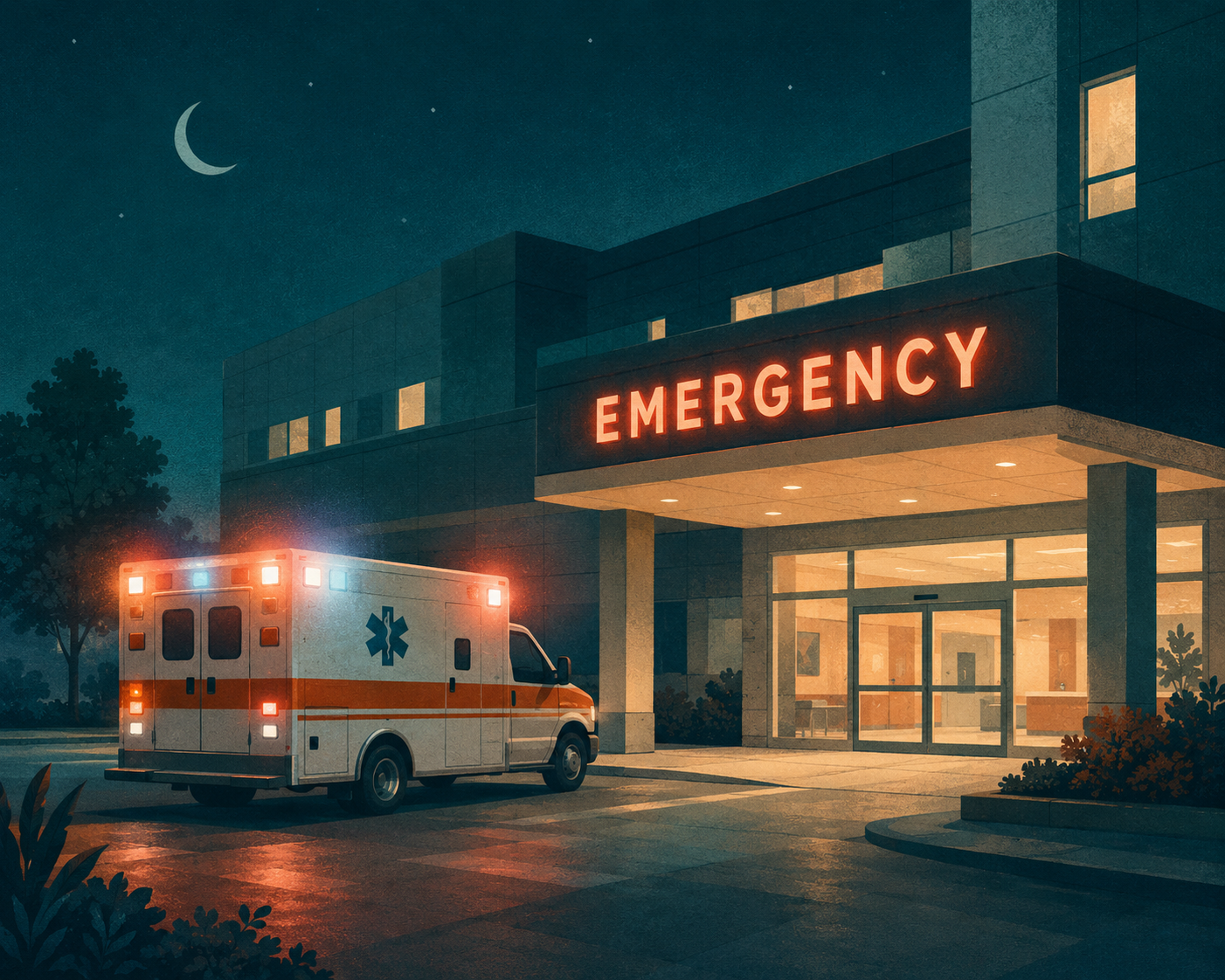
An ambulance will be faster, you think, and surely you’ll be taken straight to a room. So you call 911 and end up on an EMS stretcher at the ambulance entrance just inside the emergency department.
The charge nurse listens to the abbreviated EMS report, looks at the computer, and directs, “Please bring her to the waiting room and give a full report to the triage nurse before you leave.”
The next thing you know, you’re sitting in the waiting room with other patients and their family and friends, waiting to be triaged.
What happened?
An ambulance ride is not a ticket to the front of the line
In a perfect world, ambulances wouldn’t be needed very often. And when they were, they would arrive at an emergency department with open rooms and clinicians waiting at the door.
In our imperfect world, things don’t typically operate in this manner.
Rooms aren’t always open. If they are, some may need to be held for the most serious emergencies. Nurses are giving medications. Clinicians are often busy seeing other patients.
When a true life-threatening emergency arrives, staff respond immediately. Thankfully, most ambulance arrivals are not those.
So how do hospitals balance the needs of the community with finite resources?
For many ambulance arrivals, a paramedic or EMT gives a report to the emergency department before reaching the hospital. This may include the patient’s symptoms, medical history, vital signs, treatments already given, and whether the crew believes the patient is stable or critically ill.
This information helps the emergency department make an initial plan.
Should a room be prepared now for a patient who may be crashing? Should a stroke or heart attack team be alerted? Or does the patient appear stable enough to complete the usual triage process after arrival?
On arrival, EMS gives an updated report and notes any changes. The patient may have a brief examination by a nurse or clinician. A decision is then made about where the patient should go next.
That may be a resuscitation room, a regular treatment space, another clinical area, or triage followed by the waiting room.
Where you go depends on both your medical needs and the space available. How urgently you are treated depends on how urgently you need care.
And often, for a stable ambulance patient, the next stop is triage.
Then why call an ambulance?
Because an ambulance is not simply a ride to the hospital.
EMS can evaluate you, monitor your vital signs or heart rhythm, perform an ECG, give oxygen or medications, control serious bleeding, support your breathing, and begin treatment before you reach the emergency department.
They can also alert the hospital that a critically ill patient is coming, allowing the appropriate staff and equipment to be ready.
An ambulance may get care started sooner.
It does not guarantee that the next stage of care will happen immediately in an emergency department room.
And ending up in the waiting room does not necessarily mean calling an ambulance was a mistake. It means that, after you arrived and were assessed, you appeared stable enough to wait while patients with more immediate needs were treated.
Does this mean it’s better to drive yourself or wait for a ride?
No. Not necessarily.
Do not call an ambulance simply to get seen faster. It usually will not change how quickly you are seen.
But do call one when you may need emergency care during transport, cannot get to the hospital safely, or have symptoms for which traveling by car could be dangerous.
And if you are able to travel by car but your symptoms could interfere with driving, have someone else drive.
You do not need to know exactly what is wrong before calling. That is part of what EMS is there to help determine.
The ambulance gets you to the emergency department safely and may begin care along the way.
It just doesn’t decide your place in line once you arrive.
Further reading
- “Still in the waiting room” doesn’t mean “still waiting for care” — Emergency Room Explained
- But I was here first… — Emergency Room Explained
References
- American College of Emergency Physicians and Emergency Nurses Association.Emergency Department Triage. Joint policy statement. Approved January 2025.
- National Highway Traffic Safety Administration, Office of Emergency Medical Services.What Is EMS?. EMS.gov. Updated February 19, 2025.