Why Do Some People Go Back Before Me in the ER?
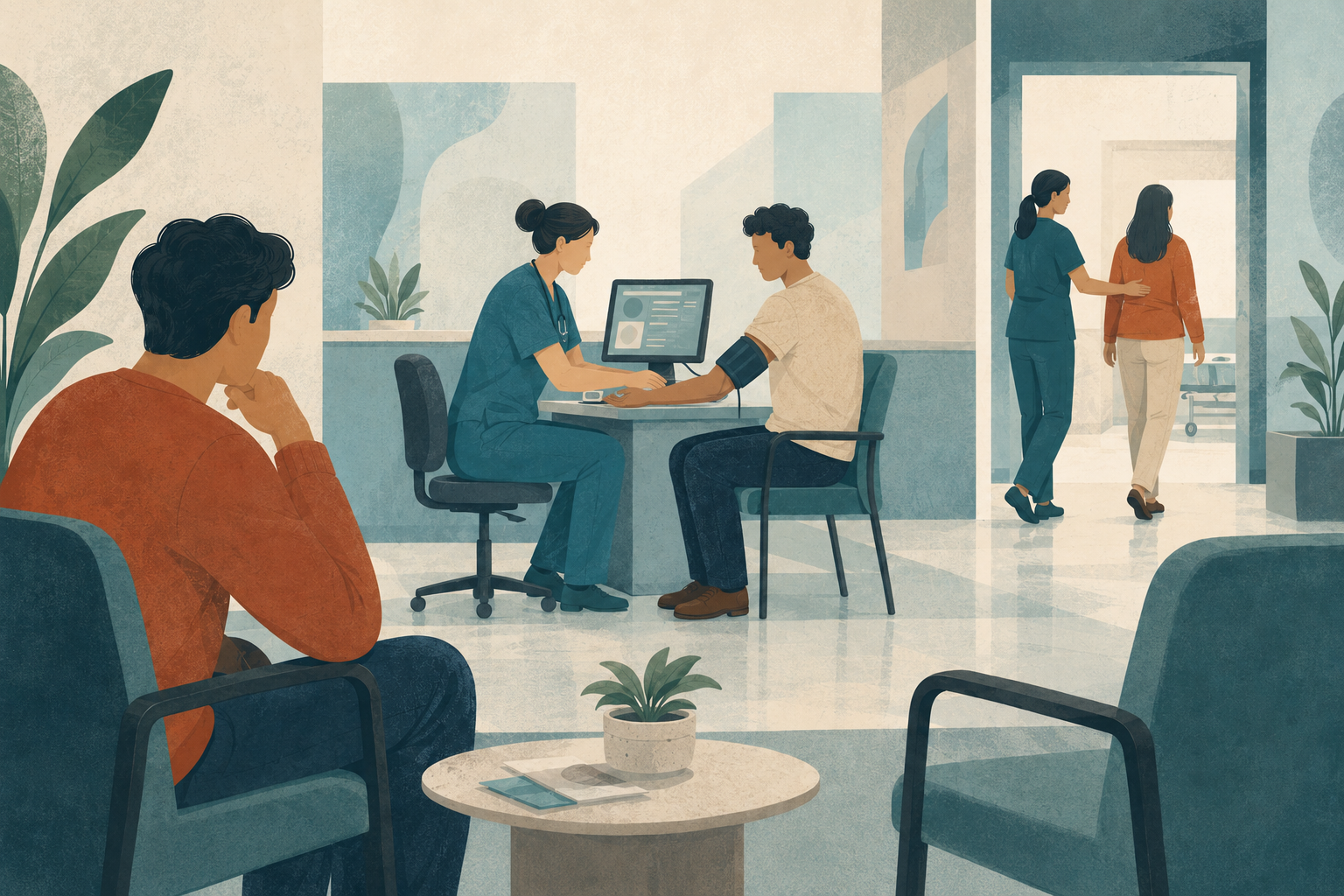
You’ve been triaged and have been sitting in the waiting room for 30 minutes. Someone walks in the door, gets triaged, and sits down next to you. Five minutes later, that person is called and brought back to a room, and you’re left in the waiting room wondering if they’ve forgotten about you. Or worse, you wonder if no one understands how bad you feel.
So what happened?
The emergency room is not a line. It may look like a line because everyone is sitting in the same waiting room, but the ER is not sorting people only by who arrived first. It is sorting people by urgency, risk, resources, and what might happen if care is delayed.
That sorting process is called triage.
The word triage comes from French and means sorting. In the ER, it means sorting patients into broad levels of urgency. It is not a final diagnosis. It is not a promise about exactly when you will be seen. It is an early estimate based on your symptoms, vital signs, appearance, age, medical history, risk factors, and what could go wrong if care is delayed.
Some patients are likely to need a brief exam, advice, medication, a prescription, or simple treatment. Others need immediate care because waiting could be dangerous. Most people fall somewhere in between.
That may not mean what you think it means.
Some emergencies are obvious from across the room. Many are not. A person may be walking, talking, texting, or sitting calmly and still need to be seen quickly.
Examples include:
- chest pain with a concerning ECG
- subtle stroke symptoms
- a very young infant with fever
- dangerous vital signs
- severe agitation or safety risk
- trouble breathing or a serious allergic reaction
- an eye emergency where vision may be at risk
- testicle or ovary emergencies, where delay can sometimes mean losing the organ
- a dialysis patient with a dangerous electrolyte concern
- a head injury in someone taking blood thinners
And many others.
Back in the waiting room, pain matters. Severe pain is taken seriously. But triage is usually asking a safety question before a comfort question: is this person at risk of dying, losing important function, losing an organ, or getting much worse if they wait?
There is another piece most people never see: not every open space can safely take every patient. Some patients need a monitored bed. Some need oxygen or suction. Some need an isolation room, a behavioral health-safe space, a procedure room, or a resuscitation bay. Sometimes a room opens, but it is not the right room for your situation.
That is also why someone with a smaller problem may move faster. A person with a simple cut may be sent to a rapid-care room while someone with abdominal pain waits for a main ED bed. That does not mean the abdominal pain was ignored. It also does not mean the person with the cut is “sicker” than the person with abdominal pain. It means the department is using different spaces for different needs.
So yes, you may have been there first. But the ER is not only asking, “Who arrived next?” It is asking, “Who is at risk? What do they need? How soon do they need it? And where can that safely happen?”
Further reading
- Why Do I Have To Wait in Emergency Departments? — American College of Emergency Physicians
- Emergency Nursing Triage Education Program: Triage Portfolio — Emergency Nurses Association
- Emergency Room Guide — HealthEd for Everyone
- Still in the waiting room doesn’t mean still waiting for care — Emergency Room Explained
- What is the emergency room actually for? — Emergency Room Explained
References
- American College of Emergency Physicians and Emergency Nurses Association.Emergency Department Triage. Joint policy statement. Approved January 2025.
- Wolf L, Ceci K, McCallum D, Brecher D.Emergency Severity Index Handbook. 5th ed. Emergency Nurses Association; 2023.
- Barnes DK, Chang R.Some Patients Can’t Wait: Improving Timeliness of Emergency Department Care. Agency for Healthcare Research and Quality Patient Safety Network. 2020.