The big sign overhead screams, “EMERGENCY,” in red capital letters. The automatic double door opens for you and you walk in.
You’ve arrived.
Then, the dance begins.
First person: “Are you checking into the emergency department? Okay, check in over there.”
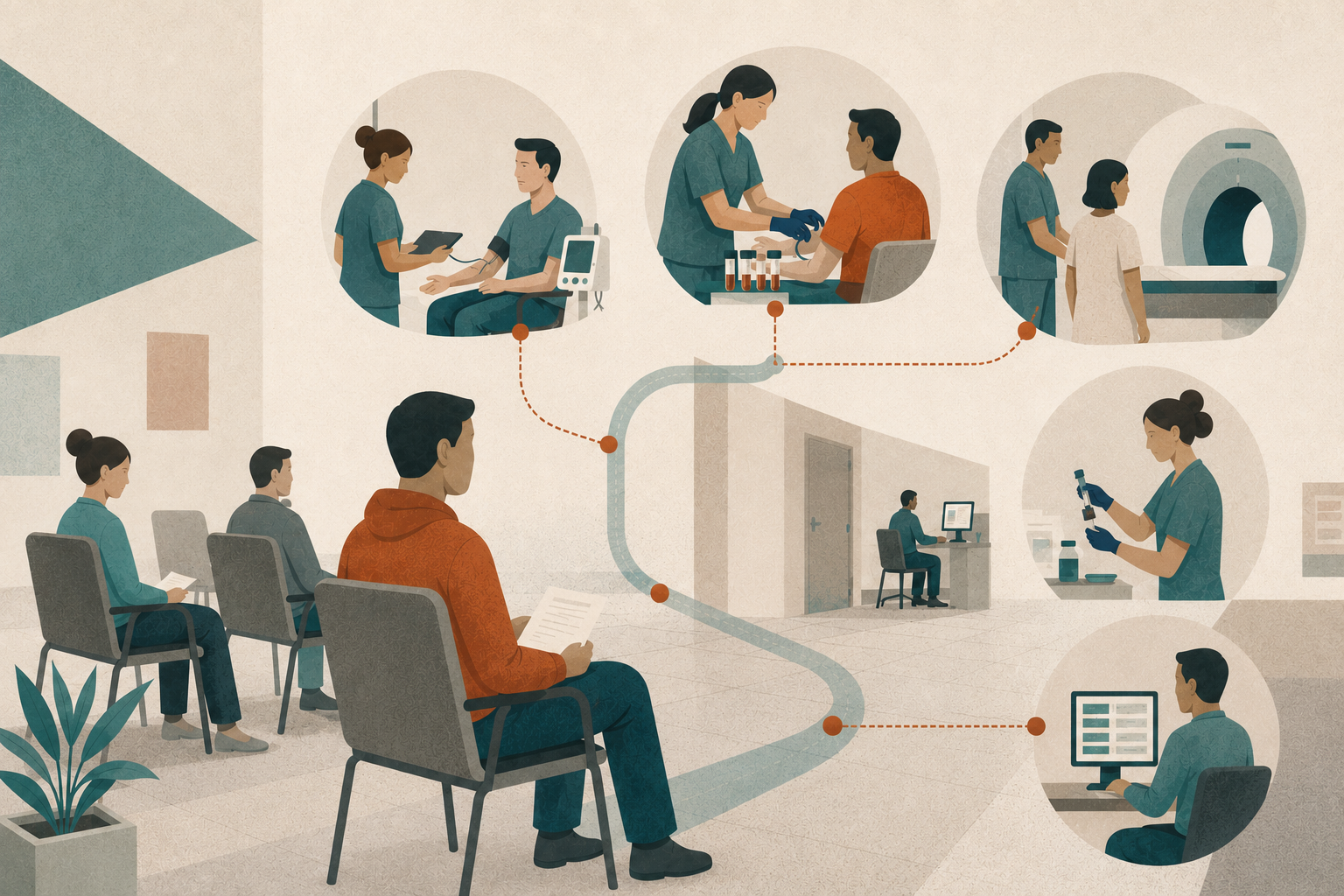
Another: “I’m going to get you in the system. What brings you in today? Okay, fill out these forms. The triage nurse will be out to get you shortly. Go sit over there. Oh, and some of the patients in the waiting room have already had part of their evaluation started.”
Then: “I’m going to get you triaged. First let’s get your vital signs. What brings you in today? [...] Do you feel safe at home? [...] Okay, we’ll get you in to see a provider shortly. You can go take a seat back in the waiting room.”
Next: “Hello. I’m Dr. Smith, the provider in triage. I know you’ve likely answered this a million times at this point, but what brings you in today? [...] Hmm. Alright, I’m going to examine you now. [...] Okay then. I’m going to place some orders for the labs and imaging studies we’d like to get today to try to see what’s going on. The nurse will get you something for pain as well. Someone will take you back to the waiting room and they’ll call you when they’re ready for you.”
Wait a second. You’ve been triaged and seen by a physician, and you’re still waiting?
Well, no.
You’ve moved into the next phase. You’re not waiting to be seen, but instead waiting for things to happen. Your care has begun, but it may not always feel like it.
In many emergency departments across the United States, this is a common care model. It goes by different names, and has different flow paths, but it all comes from the same basic idea. There are usually more patients needing evaluation than there are open treatment rooms, and some rooms must remain available for patients who physically cannot wait in a chair.
And this is where the confusion begins. You may not be waiting to be seen. You may not be waiting for care to begin. You may just be waiting for the next step.
The traditional model looked simpler from the patient’s perspective. You felt you were having an emergency and went to the emergency room. They checked you in, triaged you, and brought you to a room to see the doctor. Oh, but we missed a step—the waiting. Between triage and seeing the doctor, you waited. It may have been one minute, or it may have been thirty, but you waited.
Then, things changed. Emergency departments got busier, and the old model started to break down. If every patient had to wait for a room before anything started, many people would wait hours before labs, imaging, medication, or a medical evaluation even began.
So, newer models were developed. Different hospitals use different names for these approaches: provider in triage, rapid care, vertical care, fast track, split flow, results waiting, and others. The details vary, but the goal is similar: start safe parts of your visit before a traditional ER room is available.
And what about people who arrive by ambulance? Many go through the same process if they’re stable. Ambulance to triage booth. Triage booth to waiting room. An ambulance is transportation to the ER, not a guarantee of an immediate room. Emergencies are emergencies, and vital signs, symptoms, and risk matter more than how someone arrived.
Just remember: “still in the waiting room” does not always mean “still waiting for care.”
Further reading
- What Can I Expect When I Go to the Emergency Department? — American College of Emergency Physicians
- Some Patients Can't Wait: Improving Timeliness of Emergency Department Care — AHRQ PSNet
- Emergency Room Guide — HealthEd for Everyone
- But I was here first... — Emergency Room Explained
- ER Jargon: A Patient’s Guide — Emergency Room Explained
References
- American College of Emergency Physicians, Emergency Medicine Practice Committee.Emergency Department Crowding: High Impact Solutions. May 2016.
- Grant KL, Bayley CJ, Premji Z, Lang E, Innes G.Throughput Interventions to Reduce Emergency Department Crowding: A Systematic Review. Canadian Journal of Emergency Medicine. 2020;22(6):864–874.
- Hsieh A, Arena A, Oraha A, et al.Implementation of Vertical Split Flow Model for Patient Throughput at a Community Hospital Emergency Department. The Journal of Emergency Medicine. 2023;64(1):77–82.