Boarding.
Unless you’ve got military interrogation methods on the mind, that probably isn’t a word you associate with an emergency department.
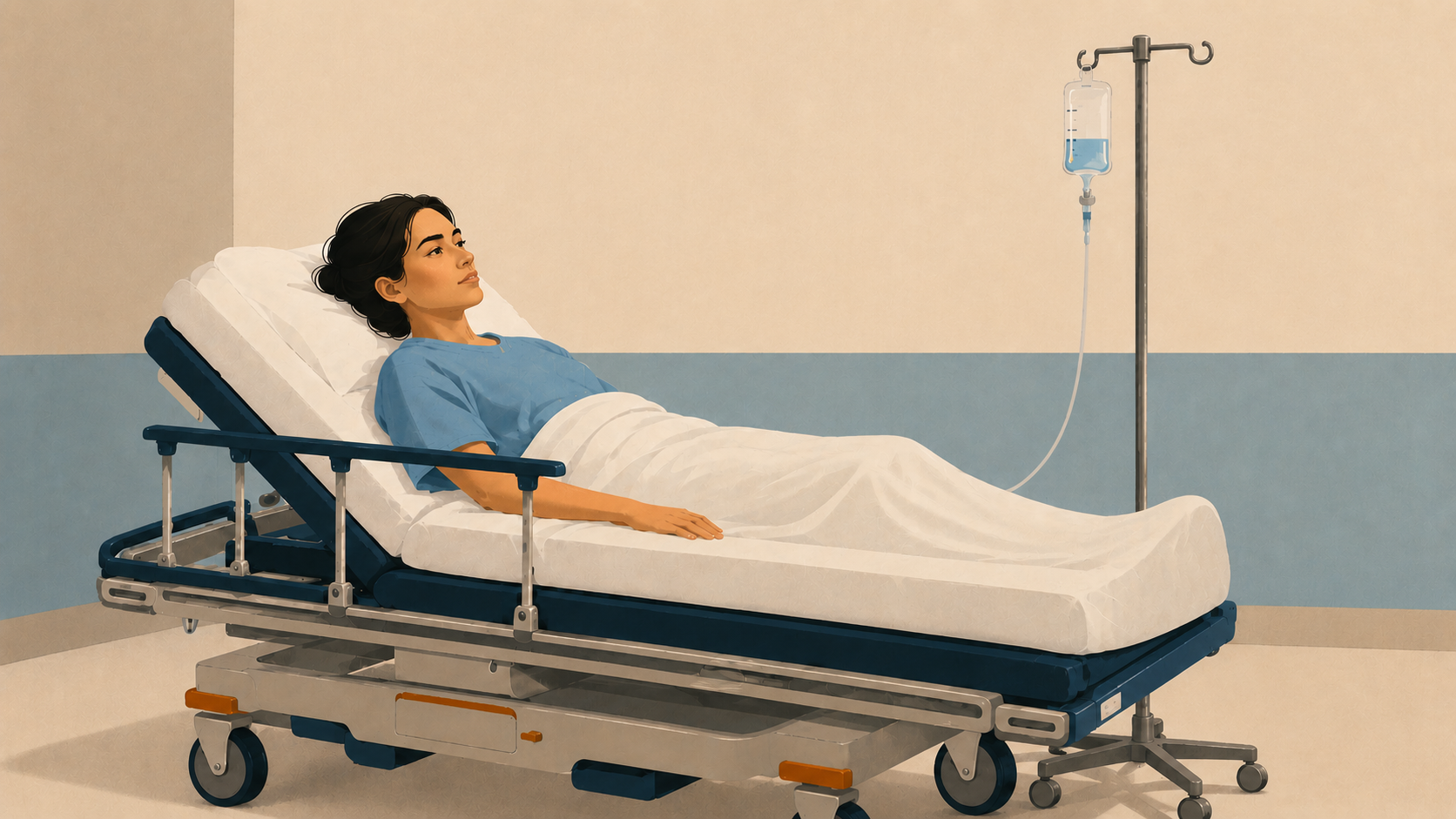
But think “room and board.” A boarder is someone being provided lodging. In a hospital, the term has taken on a slightly different meaning: a patient who needs to be somewhere else, but is still waiting in the emergency department.
Admitted doesn’t mean a bed exists
Whether the inpatient beds are upstairs, downstairs, down the hall or multiple towns and cities away, once the decision has been made that you need inpatient care, but you remain in the emergency department waiting for a bed here or somewhere else, you’re boarding.
Naturally, when you hear, “You’re being admitted,” your mind immediately pictures someone walking in after the doctor to wheel you to your destination. However, these are separate processes. Being admitted means the clinician decided that you need hospital-level care. The hospital still needs to have an appropriate, available, staffed bed.
And, “there are no beds” doesn’t necessarily mean that every physical hospital room has a person in it either. A bed may be unavailable because there aren’t enough nurses to staff it, a patient needs heart rhythm monitoring or an ICU bed, or another patient is still in the room, meaning you’re waiting for their discharge and the room to be cleaned.
Boarding is common, but that doesn’t mean it’s good. It’s recognized as a patient-safety and hospital-capacity problem, and hospitals and health systems have spent years trying to reduce it. For now, though, it remains common enough that it’s worth understanding what’s happening while you wait.
Waiting for a bed upstairs
Boarding in the emergency department can be confusing to say the least. Your location doesn’t necessarily tell you which clinical team is responsible for you. The emergency physician may remain responsible until the inpatient team accepts admission. In some hospitals that new team assumes care while you’re still in the ED. In others, responsibility remains with the ED until you physically leave. Nursing arrangements vary as well.
Awaiting transfer
Perhaps you’ve been triaged and examined by the emergency clinician. Your tests are complete, and the physician comes back to the room. “You need to be admitted, but the problem you have requires a higher level of care, meaning we’d like to transfer you.” Or perhaps, “This hospital is full beyond capacity and we’re recommending transfer to another hospital.”
Neither one of those options sounds great, but they’re both common. One is simply saying: you need something we don’t have. The other is saying: you need something we have, but there are so many people who also need it we’re afraid you may not get it in a timely manner if you remain here waiting for it. As a clinician, I want to do what I feel is best for you, and if that means sending you somewhere else, that’s what I’m going to offer.
With that said, transfers are not as easy as they sound, and they could be an article in themselves. Suffice it to say that there are many steps in the process, and one of the final steps is awaiting a bed at the next hospital. Even after another hospital agrees to accept you, the transfer may not happen until an appropriate bed or other destination there is ready. Sometimes that’s almost immediate. Other times it’s hours, or less commonly, days.
And sometimes the bed is ready, but you still need an ambulance for the transfer, and there just aren’t any available. Interhospital transfers often depend on ambulance services that may also be handling 911 calls and transfers for other hospitals.
The time you spend waiting for transfer is another common boarding scenario. You receive the treatment within the capabilities of the transferring hospital, but you’re still boarding, awaiting definitive management somewhere else.
Boarding issues and what you can do about them
- Who’s my doctor now? That’s a very reasonable question. This can be ambiguous and a somewhat invisible process, though we don’t mean for it to be. You can absolutely ask, and should get a straightforward answer.
- If I’ve been admitted and I’m boarding, why are some ER patients still getting rooms? This is less complicated. At the end of the day, the job of the emergency department is still to evaluate everyone who comes through the door, and it doesn’t stop when the hospital is boarding. An ED treatment room and the inpatient bed you’re waiting for are two different things. Newly arriving patients still need places where they can be examined, monitored and treated, particularly when they’re too sick to remain in the waiting room.
- I’m getting hungry. This is not an uncommon problem, but it doesn’t hurt to ask. If a transfer or admission takes longer than expected, you may start to get hungry. If the clinician or nurse knows that you are able to eat, they’ll often place a diet order to get you some food. However, note that sometimes you’re waiting for a procedure that requires you to be NPO, meaning nothing by mouth. If you’re waiting to be transferred for a procedure, much of the time the clinician and nurse won’t know when the transfer will happen, and therefore also don’t know when the procedure will happen, so you may be without food for some time.
- I need my home medications. Similarly to asking for food, it doesn’t hurt to ask. The answer may be that they want to hold your medications for now, but you can ask. Before taking anything from your own supply, let your nurse or clinician know.
- What am I waiting for? This is often easier to answer than How long will it take? You may be waiting for a bed to be assigned, another patient to leave and the room to be cleaned, another hospital to have a place for you, or an ambulance to become available. Staff may know which step you’re waiting on without having any idea when that step will happen.
- What if I feel worse? Tell your care team. As a physician, my goal is to get you to the right place, but boarding doesn’t mean you’re frozen in time. For example, if your chest pain worsens, breathing changes, pain suddenly increases, etc., please tell someone.
- What if I feel much better? If you’ve been waiting many hours and feel substantially improved, tell your care team. The plan can sometimes change.
The frustrating part of boarding is that one decision has already been made, but the next step isn’t ready. You’re no longer waiting to find out whether you need hospital care. You’re waiting for the hospital to have the right place, or another hospital to have the right place, to continue it.
Further reading
- Why didn't they admit me? — Emergency Room Explained
- But I was here first... — Emergency Room Explained
- Emergency Department Boarding and Crowding
- AHRQ Report Identifies Strategies To Reduce Emergency Department Boarding
- ED Boarding Impact on Patient Care and Clinician Well Being
References
- American College of Emergency Physicians. Definition of boarded patient. Annals of Emergency Medicine. 2011;57(5):548. doi: https://doi.org/10.1016/j.annemergmed.2011.01.022.
- Dowling MK, Farmer S, Dixit S, Taylor N, Chollet-Hinton L, Tang A, et al. Patient and staff safety implications of emergency department boarding: a systematic review. Health Affairs Scholar. 2026;4(5):qxag084. doi: https://doi.org/10.1093/haschl/qxag084.
- Weinick RM, Bruna S, Boicourt RM, Michael SS, Sessums LL. AHRQ Summit to Address Emergency Department Boarding: Technical Report. Agency for Healthcare Research and Quality. Agency for Healthcare Research and Quality. 2025.
- Liu SW, Chang Y, Camargo CA Jr, Weissman JS, Walsh K, Schuur JD, et al. A mixed-methods study of the quality of care provided to patients boarding in the emergency department: comparing emergency department and inpatient responsibility models. Medical Care Research and Review. 2012;69(6):679-698. doi: https://doi.org/10.1177/1077558712457426.